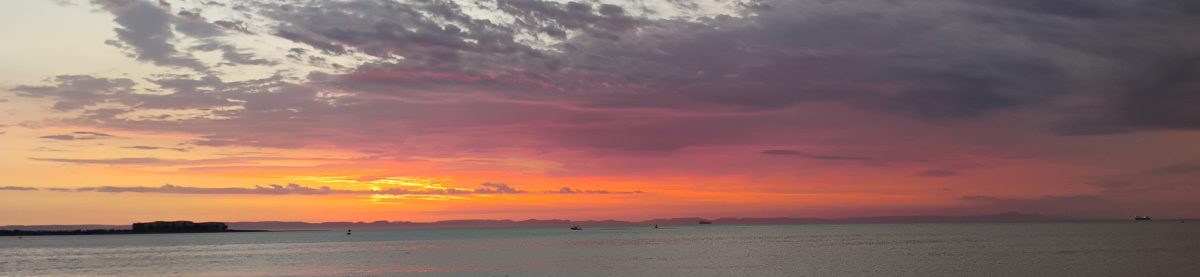
I had the good fortune to be able to visit some good friends, and they took me to the aquarium! While I didn’t actually scuba, I did get to see some cool creatures and learn some new animal facts.
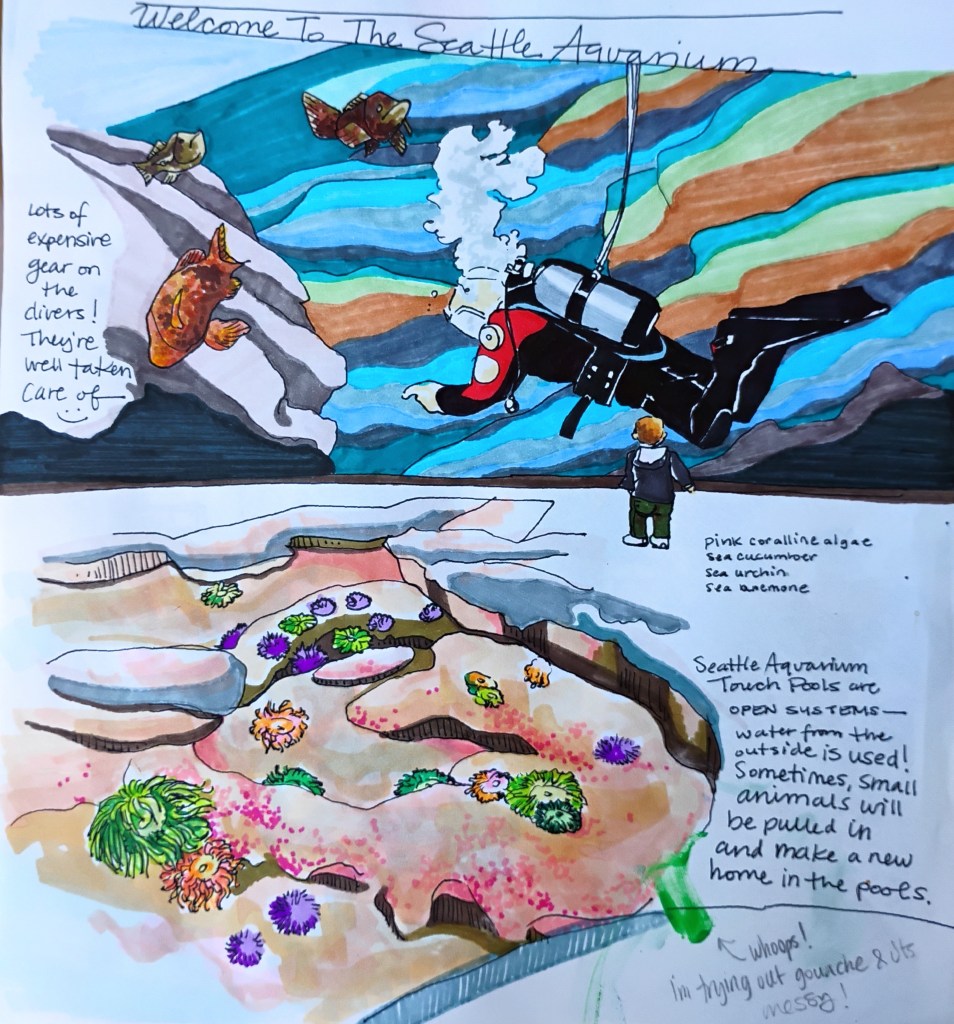
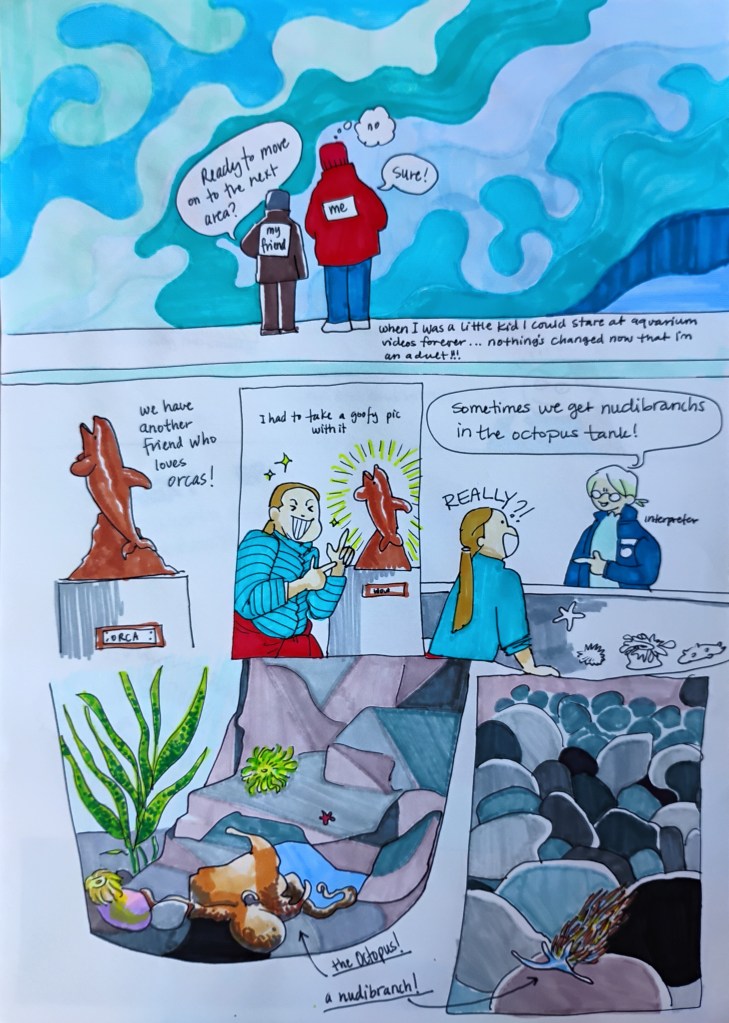
I had been to this aquarium once before with a different friend, several years ago when the second half of the aquarium was still under construction. Its very well done, with lots of great-looking habitats and interesting critters.
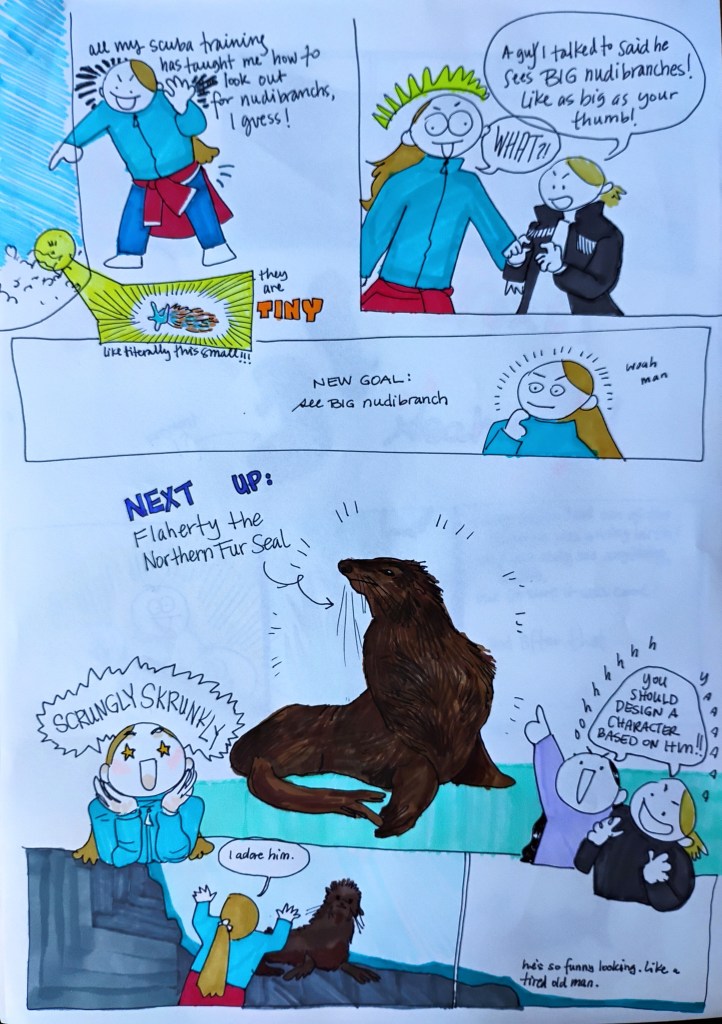
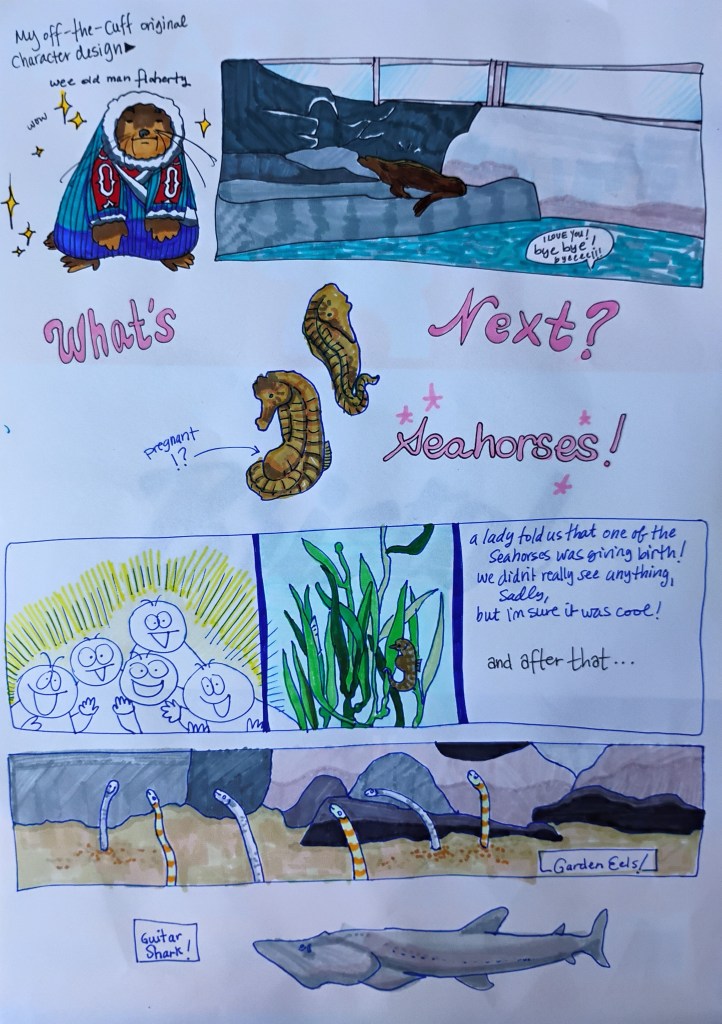
I hadn’t been able to see the Northern Fur Seals the last time, and I fell in love with Flaherty at first sight on this second visit. He looks like a disaster, with scraggly hair and bloodshot eyes… but he’s perfectly alright. I think fur seals just look like that.

I spotted a nudibranch! The water in the Seattle Aquarium comes in through the Puget Sound, so little creatures will get sucked into some of the tanks and often make their new homes in the exhibits. Nudibranches are often seen in one area of the octopus tank, and I made it my life’s mission to find one… and amazingly, I did. They are absolutely tiny. The picture below of the nudibranch is probably twice as big as the real thing.
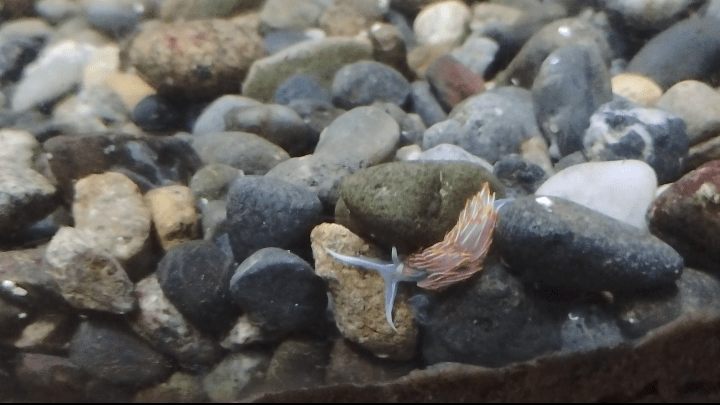
How fabulous! I know very little about these guys but I think this is an Opalescent Nudibranch. You can check my work using this handy guide from Emerald Divers!
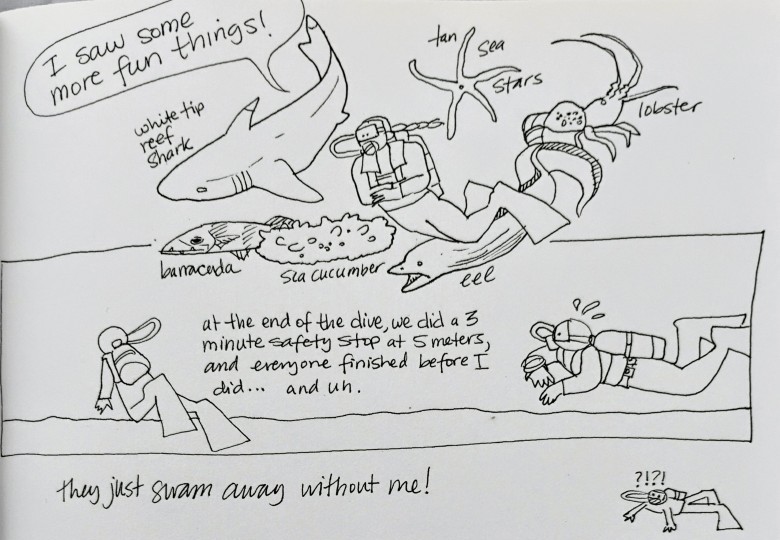
Guitar Sharks, aka Guitar Rays or Guitar Fish, are absolutely fascinating creatures. I’ve seen a couple on dives in Cabo San Lucas, though they were much smaller than the behemoth at the aquarium!
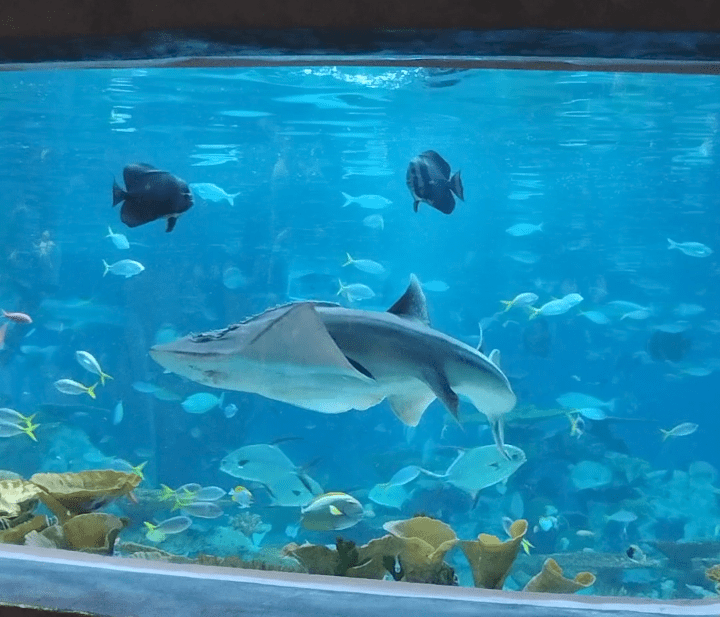
We were told they are very, very rare and many people go their whole lives without spotting one. I feel lucky having seen two or three in my lifetime out in the wild!




















 Open Water Saga