Part Three, and our final comic covering Divemaster. We’re almost to the finish line!
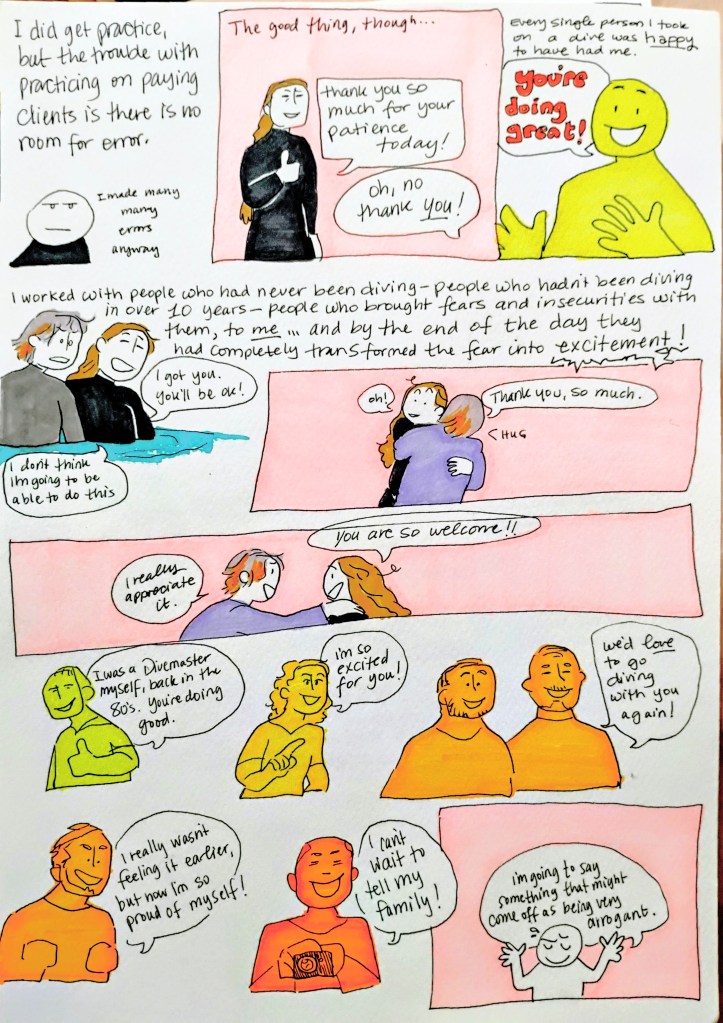
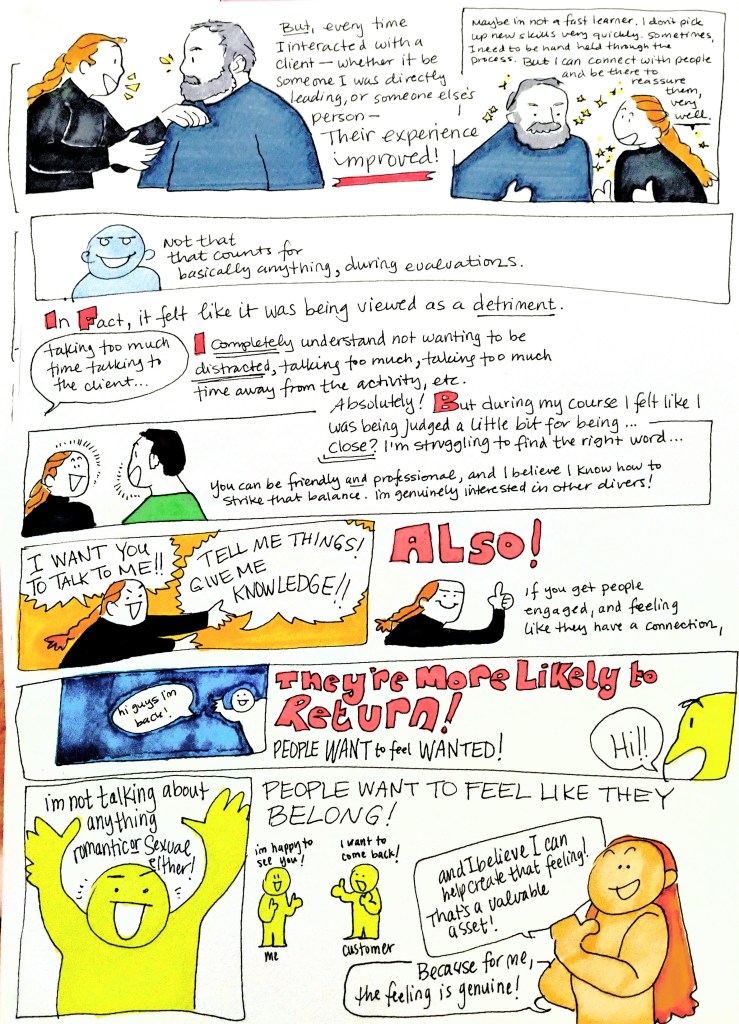
I was praised on my interpersonal relationship/customer service skills, but contradictorily sort of chided for spending so much time getting to know each client. After some thought, I think the dive shop employees thought it was weird because they were personally uninterested in getting to know clients. And I do understand the perspective: the instructors meet new people every day, usually for only a single day. Tourists come and go and you’ll never see them again. What’s the point of chit chat? Why waste energy on people you’ll never interact with again?
I think there’s a huge benefit to chit chat. For one, I get to learn more about different types of diving, hear different interesting stories, and get recommendations for dive sites and vacations. It’s all useful information for me.
Chit chat often relaxes the person you’re talking to (unless they’re antisocial, but that’s rare in divers). Having relaxed divers means having easy-to-manage divers. I also think it heightens the entire experience. Nobody wants to be brushed off or not given much attention, especially if they’re trying a new activity they’re nervous about.
If the person feels like they have a connection to an experience, a place, or a person, then even if they don’t come back… they might leave a good review or even recommend the place to others! It’s good for business!
Maybe I have a different perspective on it all. Whatever works for the shop, I guess!
End of the line!
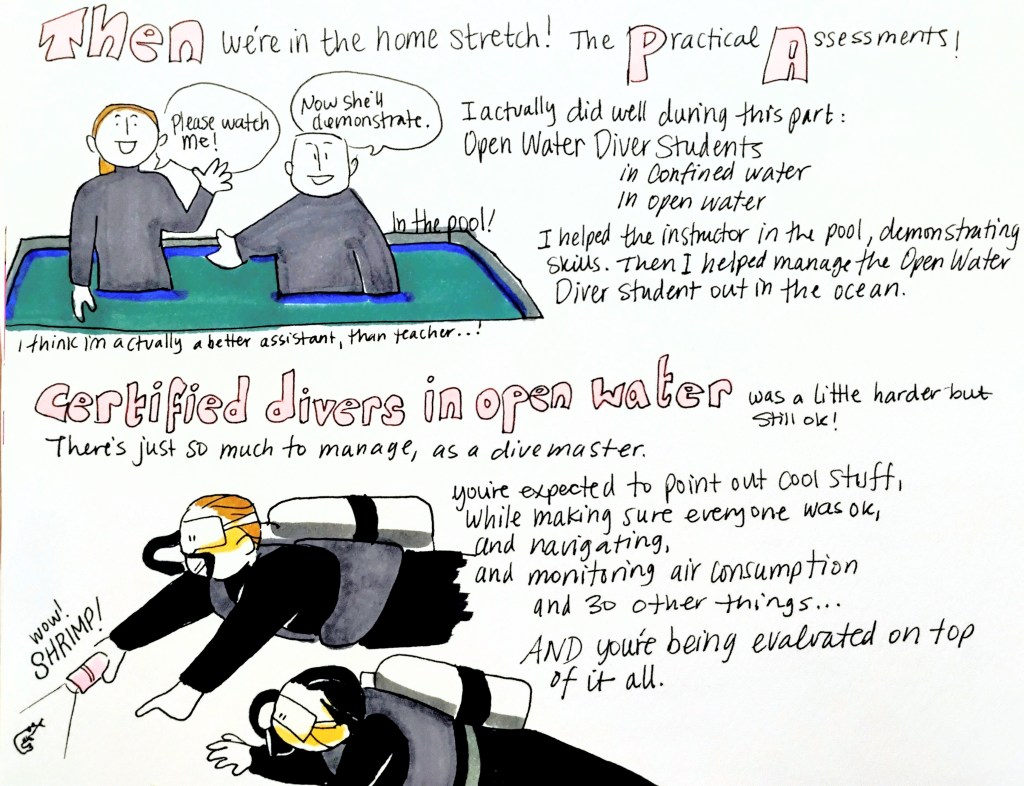
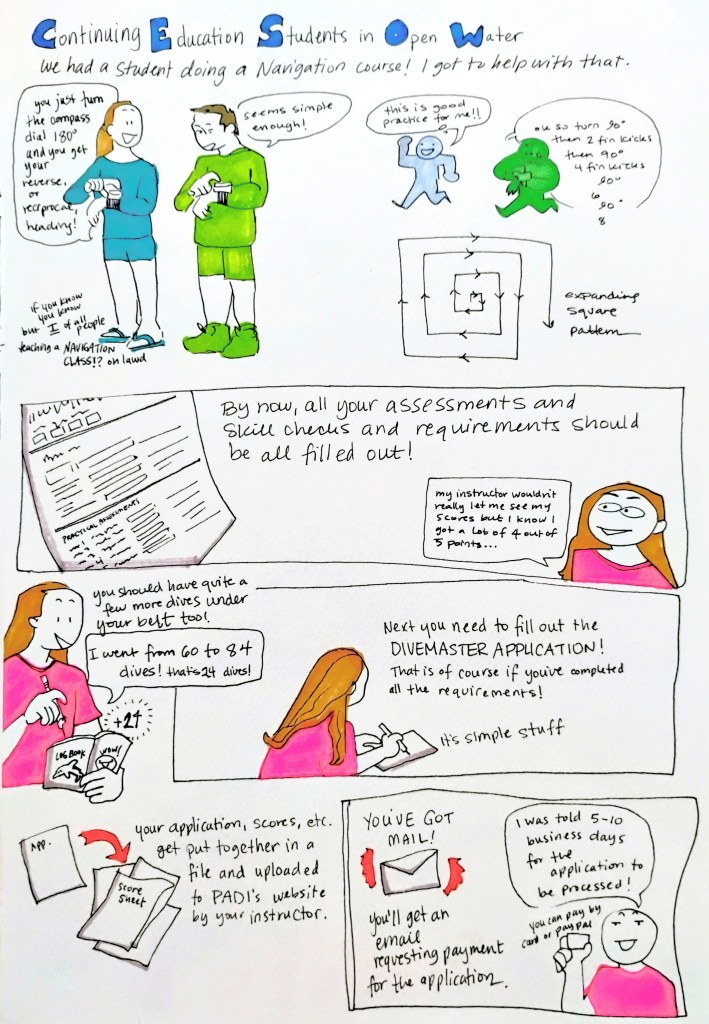
Once all the practical assessments are complete, the course is over. I was so scared I wasn’t going to pass that I didn’t quite believe it when I was told “Alright, congrats on making it to your final day of the course! After this, we’ll finish up your paperwork and application, and you’ll be the real deal. Let’s make today a good one!” I successfully led someone on a dive with no incident, and that day was indeed a good final day! We ended it on a high note. Phew! I was so ready to be finished. You couldn’t get me out of there fast enough.
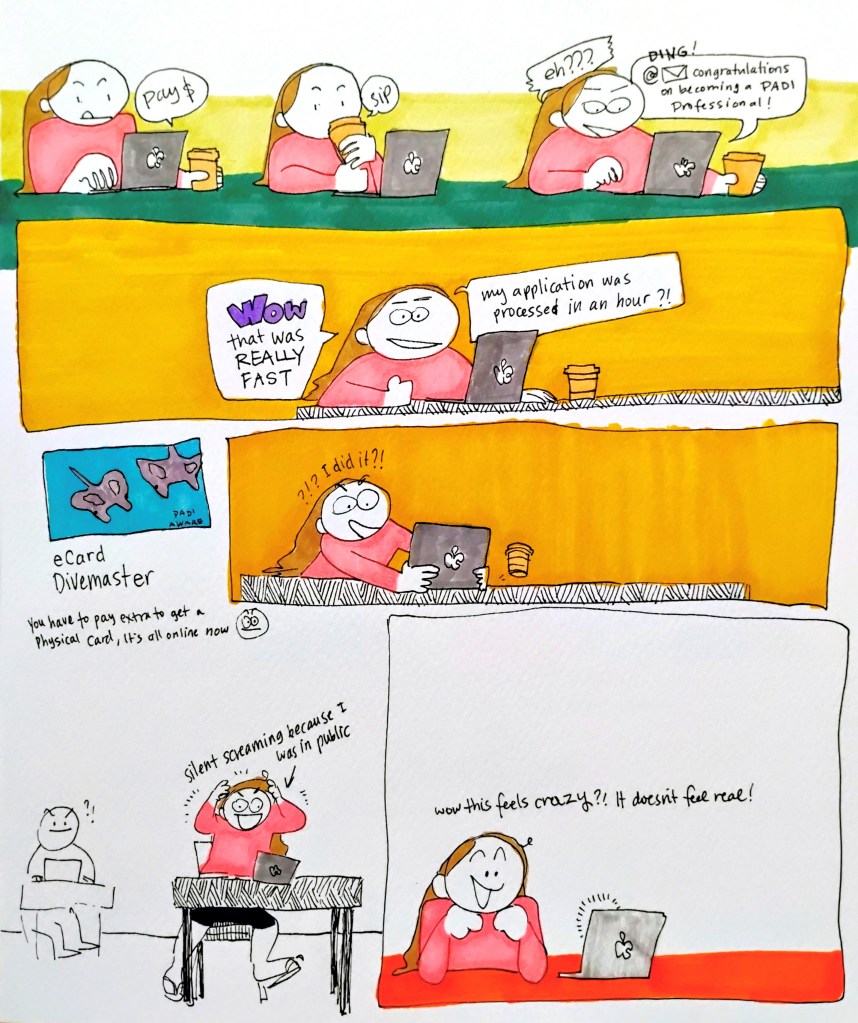
The paperwork was very simple on my end. I had to sign a few forms, fill out my information, confirm that information was correct online, submit the application payment… and I was a Divemaster. I’m very surprised by how fast it took. I was told it would take about 2 weeks to process the application but it took under 2 hours.
As a Divemaster, you get access to the PADI Pros website, which has teaching resources, a quarterly magazine, seminars, a little store (I’m thinking about buying the Divemaster ballcap…) and more.
This is where you can order your physical Divemaster card, as you initially only get a digital card. The physical card is mailed to the address you have on file and was $55USD at the time of this writing. That’s annoyingly expensive, but I want my hunk of plastic!! This is the most important credential I’ve ever received! This is more precious to me than my darn diploma!!!
You also get assigned to a regional PADI office, which you can probably change if you move in the future. The application asks in what city and country you’ll be working, which was really interesting. What if I don’t want to work as a Divemaster? I am now under the purview of of PADI’s Latin American branch. Very exciting.
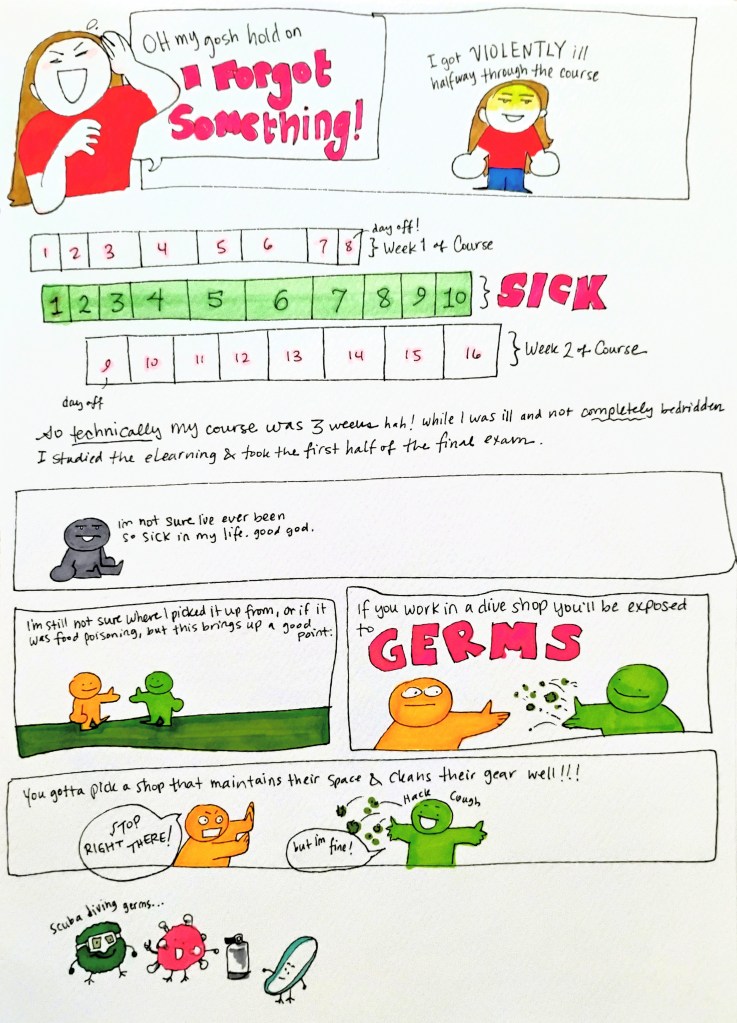
I
Got
So
Sick
I’m not sure I’ve ever been so ill. I was contemplating going to urgent care or the hospital, but I pulled through. Luckily I have all the time in the world, so I just took a long break while I healed and came back when I was feeling good again. Holy cow. I’m still not sure where I picked it up or what it was, but it was awful. 0/10 do not recommend!
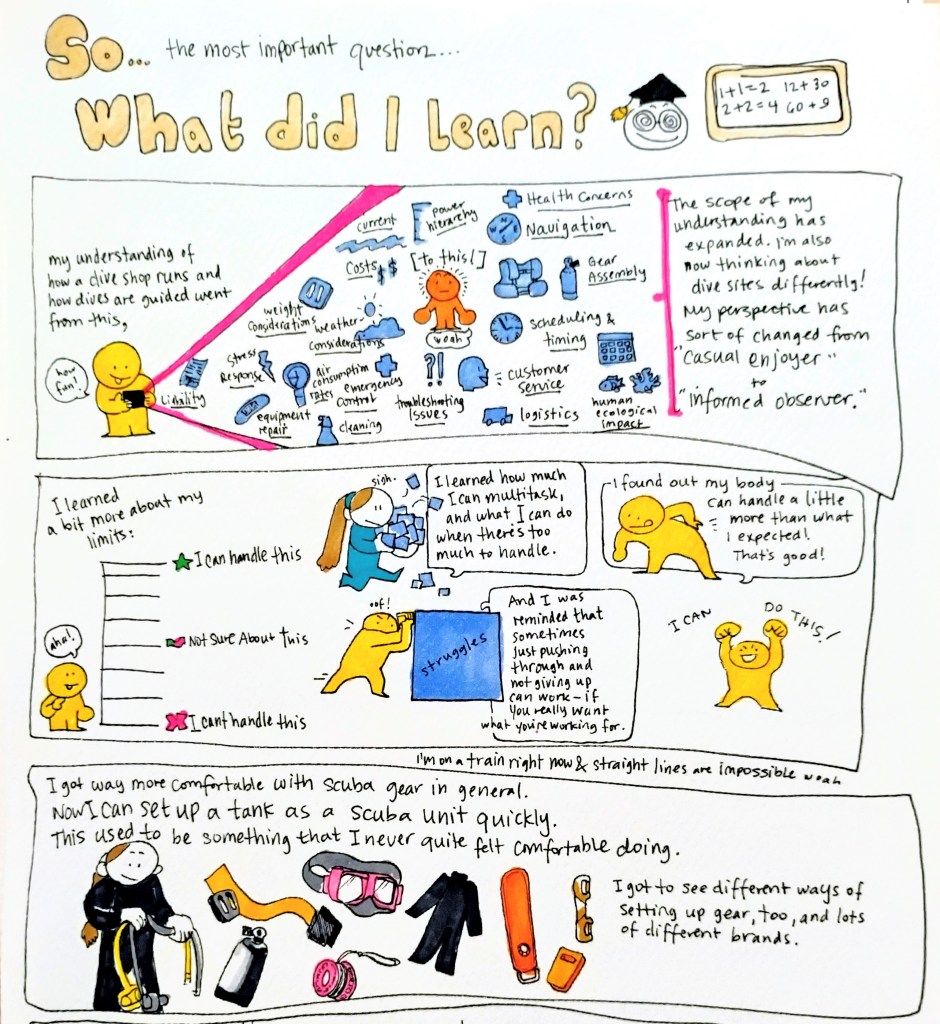
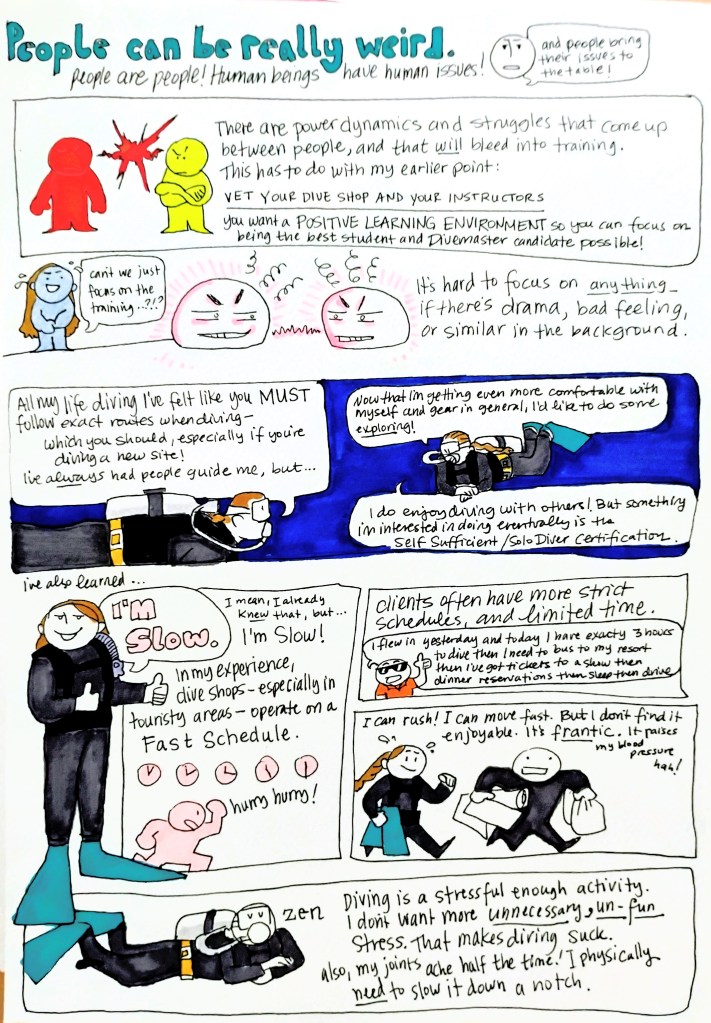
I learned a lot, mostly about myself and my abilities. How far out of my comfort zone can I go and have the activity still be worth it? How strong do I think I am, vs. how strong am I really? What environment is best for me to learn in?
What makes a good dive shop, and what qualities does a good instructor need to have to be successful? What bad and good habits do I need to watch out for in other people? What would it take for me to be a confident dive professional? Do I want to be a dive professional after this?
I learned a lot of practical things too, but the most valuable things I got from the course certainly involved my personal development and self knowledge.
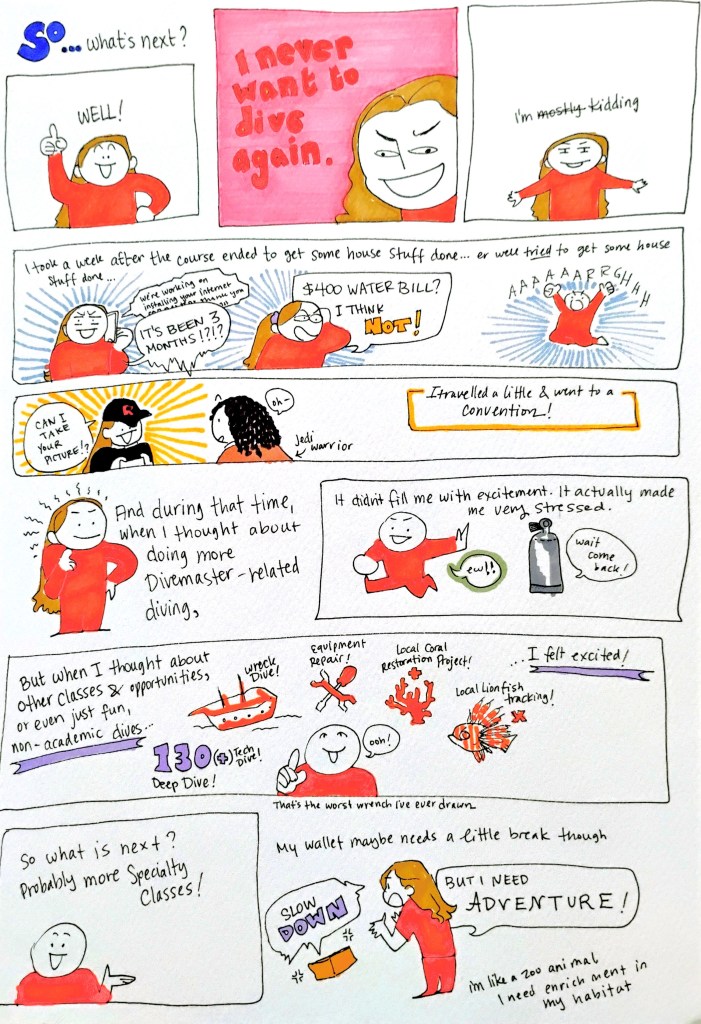
So yeah! What’s next…?
Well…
Honestly, probably not more Divemaster stuff! Like I said before, I didn’t enjoy the course, and now I’m not sure I’d enjoy actually being a Divemaster. I don’t know if it’s that I don’t like Divemaster activities, or that I was too stressed to enjoy it but would like it under different circumstances? Maybe I’ll feel better about it later. For now, it’s back to fun dives and my favorite: Specialty Classes. I need some low-stakes learning to cleanse the palate!
That’s the end, for now. Thanks so much for reading through, and I hope this helps someone out if they’re considering doing their own Divemaster training. It’s all doable, but finding the right learning environment and teacher will really make out break your experience.

 Open Water Saga